
WASHINGTON — August 19, 2026 — NASA and commercial space company Katalyst Space Technologies have abandoned an ambitious attempt to rescue the aging Neil Gehrels Swift Observatory after persistent technical problems affected the commercial spacecraft designed to carry out the mission.
The decision brings an end to an unprecedented effort to extend the life of one of NASA's most productive space observatories. With no alternative orbit-boosting mission currently planned, Swift is expected to continue descending toward Earth before eventually making an uncontrolled atmospheric re-entry.
A 22-Year-Old Space Observatory
The Neil Gehrels Swift Observatory was launched in November 2004 with an original design life of approximately two years. Despite that relatively short target lifespan, the spacecraft continued operating for more than two decades.
Swift became particularly important to astrophysicists because of its ability to rapidly detect and study gamma-ray bursts (GRBs), among the most powerful explosions observed in the universe.
The observatory has also contributed to research involving exploding stars, black holes, neutron stars and other high-energy astronomical events.
However, Swift's relatively low Earth orbit has become increasingly difficult to maintain. Increased atmospheric drag, particularly during periods of heightened solar activity, has accelerated the spacecraft's orbital decay.
NASA's Commercial Rescue Attempt
In September 2025, NASA awarded Arizona-based Katalyst Space Technologies a $30 million SBIR Phase III contract to develop and carry out the Swift Boost Mission.
The objective was ambitious: launch a commercial servicing spacecraft, rendezvous with Swift, capture the aging observatory and use its propulsion system to raise Swift into a higher orbit.
The mission was designed to demonstrate how commercial spacecraft could potentially extend the operational lives of satellites that were never originally designed to be serviced in orbit.
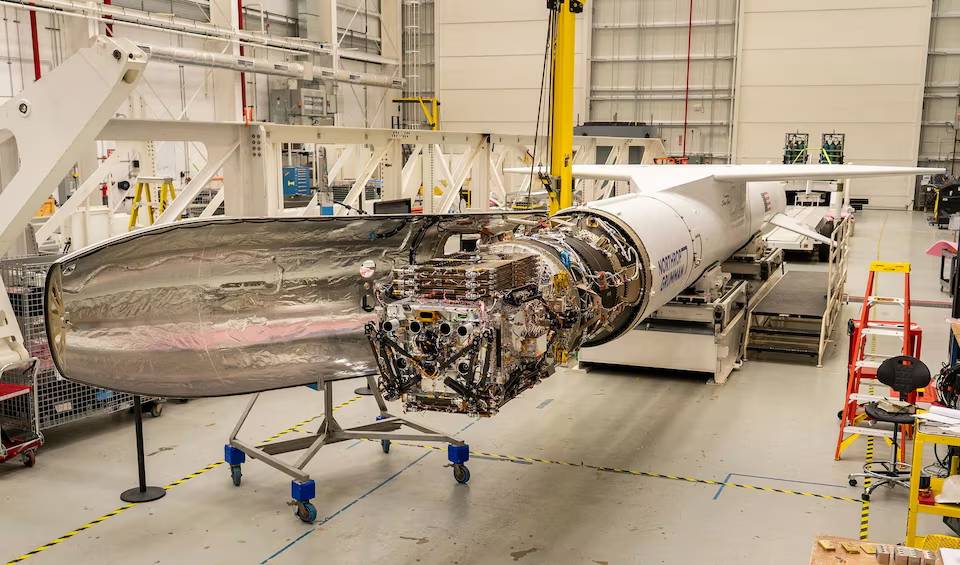
Katalyst developed the approximately 425-kilogram LINK spacecraft specifically for the mission. The spacecraft launched on July 3, 2026, aboard a Northrop Grumman Pegasus XL rocket.
Technical Problems Hit LINK
The rescue effort encountered serious difficulties during LINK's commissioning phase.
Approximately three weeks after launch, the spacecraft experienced major attitude-control and propulsion problems that caused it to enter an unexpected tumble.
Engineers from Katalyst and NASA worked to regain control of LINK. Software updates helped reduce the spacecraft's rotation, while engineers continued attempting to stabilize its attitude and restore its ability to accurately maneuver and point.
Despite those efforts, persistent control problems remained.
That ultimately made the most critical part of the mission—the close-proximity approach and capture of Swift—too risky to attempt.
Rescue Attempt Abandoned
On August 19, Katalyst Space Technologies and NASA confirmed that LINK would no longer attempt to capture or boost the Swift Observatory.
Katalyst said the decision was based on continuing attitude-control issues affecting the spacecraft.
NASA Administrator Jared Isaacman also acknowledged the disappointing outcome while emphasizing the importance of attempting new commercial approaches to space servicing.
Although Swift will not receive the planned orbital boost, NASA and Katalyst intend to continue operating LINK for additional testing.
LINK Mission Will Continue
The mission is not being completely terminated.
Instead of attempting a physical capture, LINK is expected to conduct rendezvous and proximity operations near Swift.
These non-contact activities could provide valuable information about autonomous spacecraft navigation, proximity operations and future satellite-servicing missions.
The data could contribute to the development of future commercial servicing systems, including Katalyst's planned NEXUS spacecraft for geostationary orbit.
Swift's Final Scientific Mission
NASA is expected to resume scientific observations using Swift's three onboard instruments after temporarily reducing or pausing some operations during the rescue effort.
The goal is now to obtain as much scientific data as possible during the observatory's remaining operational lifetime.
With no replacement boost mission currently planned, Swift's orbit will continue to decay as atmospheric drag pulls the spacecraft closer to Earth.
Expected Re-entry
The Neil Gehrels Swift Observatory is expected to eventually make an uncontrolled re-entry into Earth's atmosphere before the end of 2026.
The spacecraft's loss marks the approaching end of an extraordinary scientific mission that lasted roughly 20 years beyond its original design life.
For NASA and the commercial space industry, however, the failed rescue attempt could still provide valuable lessons.
The Swift Boost Mission was an ambitious demonstration of a technology that could become increasingly important as thousands of spacecraft operate in Earth orbit.
While LINK was unable to save Swift, the rendezvous and proximity testing that remains could help engineers develop safer and more capable systems for servicing, repairing and extending the lives of future satellites.
Source: NASA and Katalyst Space Technologies




Comments
0 commentsBe the first to comment on this article.