
In a landmark moment for space exploration, NASA has successfully launched its latest crewed lunar mission, marking humanity’s return to deep space after more than five decades.
The mission, known as Artemis II, lifted off on April 1, 2026, from Kennedy Space Center in Florida, carrying four astronauts aboard the Orion spacecraft. This historic flight represents the first time humans have traveled toward the Moon since the Apollo era ended in 1972
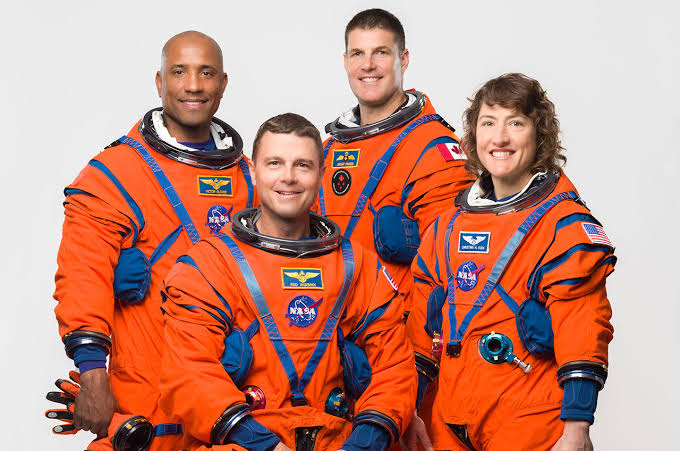
Meet the Crew The mission includes a diverse and groundbreaking team of astronauts:
●Reid Wiseman (Commander) ●Victor Glover (Pilot) ●Christina Koch ●Jeremy Hansen (Mission Specialist, Canada)
Mission Overview:
Unlike previous Moon landings, Artemis II is a 10-day lunar flyby mission, meaning the crew will travel around the Moon but will not land on its surface.
The Orion spacecraft, powered by NASA’s powerful Space Launch System rocket, will:
●Travel over 240,000 miles (386,000 km) from Earth ●Orbit the Moon and pass its far side ●Conduct critical system tests for future missions ●Gather data to support upcoming lunar landings
At its peak, the crew is expected to travel farther from Earth than any human in history, surpassing records set during the Apollo missions.
Why This Mission Matters?
Artemis II is not just a symbolic return — it is a critical test mission designed to ensure that humans can safely travel and operate in deep space again.
NASA is using this mission to:
●Test life-support systems in deep space ●Evaluate spacecraft performance with a live crew ●Prepare for future Moon landings ●Lay the groundwork for missions to Mars
The mission is part of NASA’s broader Artemis program, which aims to return astronauts to the Moon’s surface by around 2028 and eventually establish a long-term human presence there.
A New Era of Space Exploration:
The launch of Artemis II has reignited global excitement around space exploration, drawing massive public attention and signaling the beginning of a new space race era. More importantly, it represents a shift toward inclusive and international space missions, with collaboration extending beyond the United States. As the spacecraft continues its journey, all eyes are on NASA — and what could be the start of humanity’s next giant leap.
What Happens Next?
If Artemis II is successful, the next missions will go even further: ●Artemis III / IV: Expected to include actual Moon landings ●Future missions: Development of a lunar base ●Long-term goal: Human missions to Mars
Final Thoughts: After more than 50 years, humans are once again heading toward the Moon — not just to visit, but to stay. Artemis II is more than a mission. It’s a statement: The next chapter of space exploration has officially begun.





Comments
0 commentsBe the first to comment on this article.