
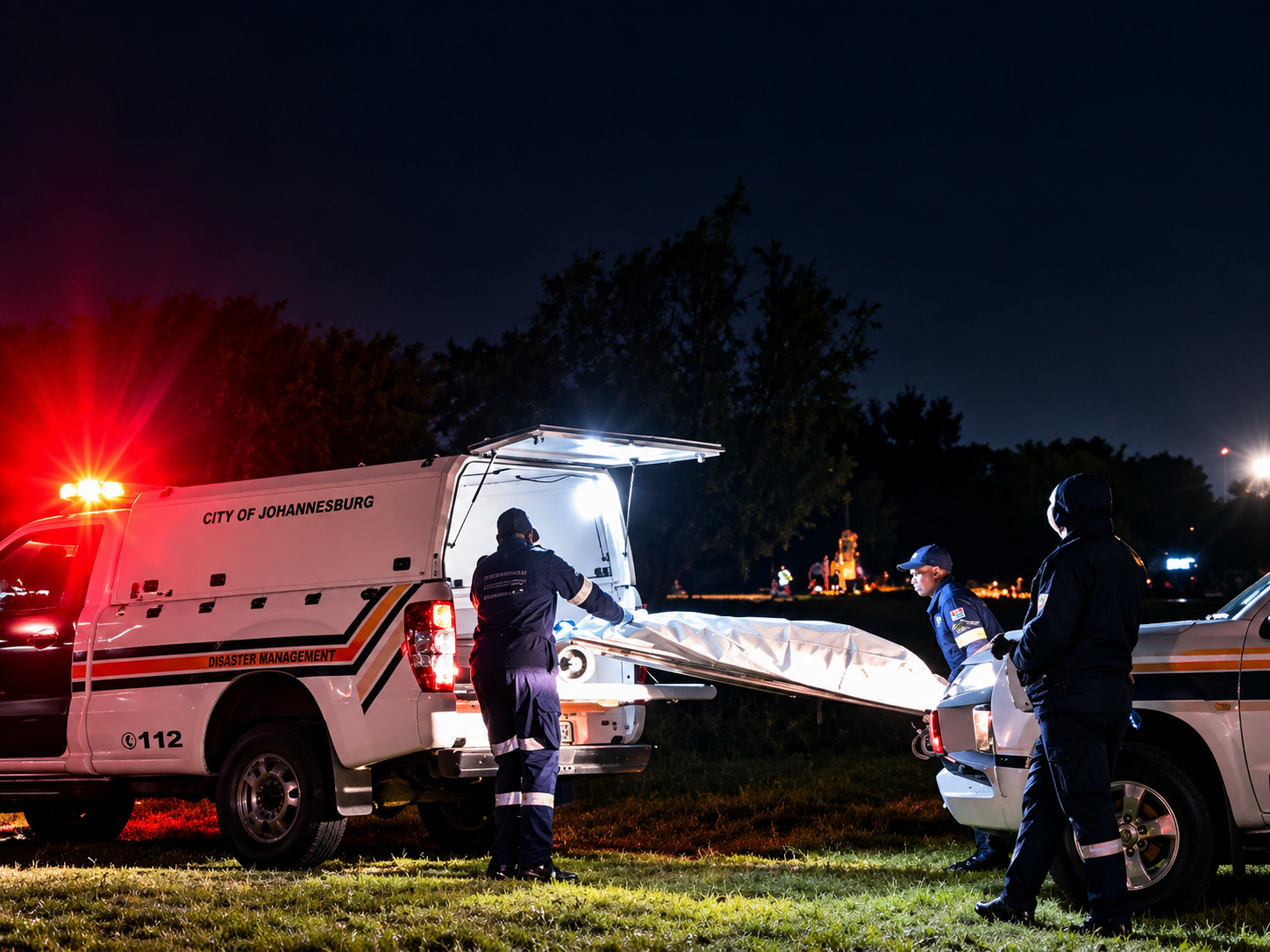
The disturbing deaths of nine women, the similarities investigators are examining, and the question South Africa is asking.
Nine women. Multiple locations. A period of roughly two months.
And now, one question is haunting communities across Ekurhuleni and beyond:
Could a serial killer be responsible?
The question has not been answered.
South African police have not confirmed that a serial killer is operating in Ekurhuleni. But investigators are examining whether a number of deaths are connected after the bodies of nine women were discovered across the municipality between July and September 2026.
The circumstances surrounding several of the cases have raised enough concern for authorities to establish a multidisciplinary investigative team and examine possible links between them.
For families who have lost loved ones, however, this is not simply an investigation into patterns and evidence.
These are nine women who are no longer coming home.
---
NINE BODIES, ONE INVESTIGATION
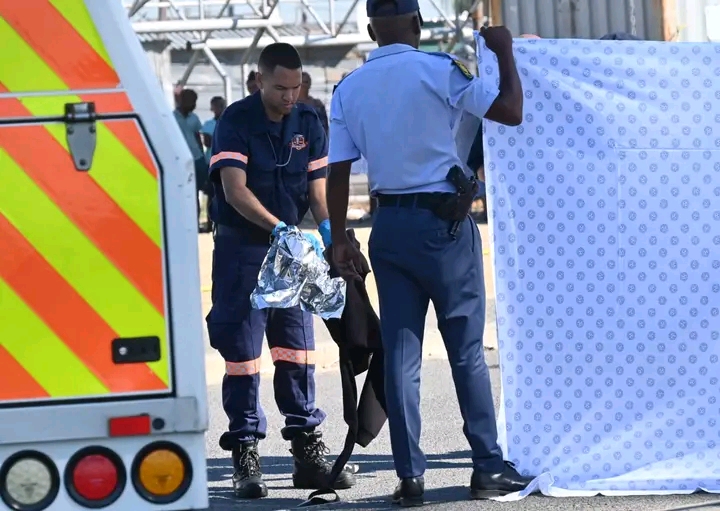
The latest development came on 17 September 2026, when police discovered the body of an unidentified woman in Dawn Park, Ekurhuleni.
According to SAPS, the discovery brought the total number of women's bodies being investigated to nine within two months.
Police said the case would be added to the broader investigation into the deaths of women in Ekurhuleni.
A multidisciplinary team of experts has been mobilised to investigate the cases and establish who is responsible.
The investigation includes specialist detectives and forensic resources, with authorities examining evidence from the different crime scenes.
But the biggest question remains:
Are these nine separate crimes — or are they connected?
---
THE FIRST CASES
The investigation stretches back to July.
The first cases were reported in and around Kempton Park, before additional bodies were discovered in places including Olifantsfontein, KwaThema and Dawn Park.
As more bodies were found, investigators began examining similarities between the cases.
Police have been particularly concerned by the circumstances in which some of the women were discovered.
Several victims were found partially or completely undressed, while some had visible bruising.
Authorities have also been investigating whether some of the women were killed elsewhere before their bodies were dumped.
These similarities do not, by themselves, prove that one person committed the murders.
But they are significant enough to warrant a wider investigation.
SAPS previously warned women in and around Kempton Park to exercise extreme caution after four women's bodies were discovered in the same vicinity over approximately two months. Police said preliminary information showed concerning similarities between some of the cases.
---
WHO WERE THE WOMEN?
Behind the number nine are individual lives, families and communities.
Among the women identified in reports surrounding the investigation are Itumeleng Kekana, Elizabeth “Tsontso” Moselakgomo, Gracious Nkomo and Dineo Motapane.
Their stories have emerged as families and communities try to understand what happened.
Some of the other victims remain unidentified.
That means there are families who may still be waiting for answers — and potentially waiting to learn whether a missing relative is among those whose bodies have been recovered.
Police have appealed to members of the public and families of missing women to provide information that could assist investigators.
---
THE SIMILARITIES THAT HAVE RAISED ALARM
The possibility of a serial killer has largely emerged because of the apparent similarities between several cases.
The women were generally young adults, with reported ages falling within a similar range.
Some were found partially clothed or unclothed.
Some had bruising.
Several bodies were discovered in areas around Ekurhuleni, sometimes after apparently being dumped.
And the discoveries occurred within a relatively concentrated period.
For investigators, however, these similarities are only the beginning.
A genuine link between crimes has to be established through evidence.
That could include forensic evidence, DNA, fingerprints, cellphone information, CCTV footage, vehicle movements, witness statements, geographical patterns and other investigative information.
This is why police have been cautious about publicly declaring that a serial killer is responsible.
---
SO, IS THERE A SERIAL KILLER?
Right now, there is no confirmed answer.
SAPS has not publicly established that all nine deaths were committed by one person.
Police have instead been investigating whether the cases are connected.
South African police have explicitly cautioned against prematurely concluding that the deaths were caused by a serial killer.
Authorities are considering different possibilities, including the involvement of multiple perpetrators or separate offenders.
The distinction is important.
A series of murders occurring in the same geographical area does not automatically mean that one person committed them.
Investigators must establish the connection through evidence.
At the same time, the similarities are serious enough that the possibility cannot simply be dismissed.
Forensic psychologist and former SAPS profiler Professor Gerard Labuschagne said the deaths should be treated as a possible serial-murder investigation while investigators work to establish what happened.
That does not mean a serial killer has been confirmed.
It means investigators should examine the possibility while keeping other explanations open.
---
THE GEOGRAPHY OF FEAR
The locations have become an important part of the investigation.
The earliest cases were concentrated around Kempton Park, while later discoveries occurred in other parts of Ekurhuleni.
The distance between locations does not necessarily rule out a connection.
A perpetrator could potentially move between areas.
But geographical proximity also does not prove that the same offender was responsible.
This is where investigators will have to build a timeline.
Where was each woman last seen?
Who was she with?
What happened in the hours or days before her death?
Where was her body discovered?
Was she killed at that location?
Was she transported?
Were there vehicles captured on CCTV?
Did the victims have any connections to one another?
Did they visit the same places?
Did they use the same transport routes?
Did they communicate with the same people?
And perhaps most importantly:
Is there forensic evidence connecting the crime scenes?
Those questions could ultimately determine whether investigators are dealing with one offender, multiple offenders or several unrelated crimes.
---
ONE SUSPECT IN CUSTODY — BUT WHAT DOES IT MEAN?
Police have confirmed that at least one suspect has been detained in connection with the investigation.
However, his detention does not establish that he is responsible for all nine deaths.
Authorities have been careful about releasing information concerning the suspect and the precise extent of his alleged involvement.
That distinction is crucial.
A person being arrested or detained in relation to one investigation does not automatically mean investigators have established responsibility for every case within that investigation.
Until evidence is tested in court, allegations remain allegations.
---
THE R400,000 QUESTION
As the investigation intensified, police appealed to the public for information.
Authorities offered a R400,000 reward for information that could lead to an arrest.
SAPS has also urged people with information to come forward through the official Crime Stop channels or anonymously through the MySAPS application.
For investigators, information from the public could prove critical.
Someone may have seen a vehicle.
Someone may have witnessed an argument.
Someone may have noticed suspicious behaviour.
Someone may have CCTV footage that investigators have not yet seen.
And somewhere, there could be information capable of connecting the cases.
---
A COUNTRY ALREADY FACING A FEMICIDE CRISIS
The fear generated by the Ekurhuleni killings cannot be separated from South Africa's broader crisis of violence against women.
South Africa has long struggled with exceptionally high levels of gender-based violence and femicide.
That is why the discovery of nine women's bodies in a relatively short period has generated such intense public reaction.
For many women, the question is not simply whether there is a serial killer.
It is whether they can safely walk home.
Whether they can go running.
Whether they can accept a lift.
Whether they can trust someone they meet.
Whether their daughters will be safe.
Communities in KwaThema and other areas have called for greater police visibility, improved lighting and stronger community safety measures following the deaths.
---
THE DANGER OF ASSUMING TOO SOON
There is another side to this story.
When multiple bodies are discovered under similar circumstances, the public naturally searches for an explanation.
The words “serial killer” immediately capture attention.
But investigations can be damaged by assumptions.
If unrelated cases are prematurely treated as one crime series, investigators could overlook important differences.
Likewise, if genuinely connected murders are treated as isolated incidents, a critical pattern could be missed.
That is why forensic evidence matters.
The question cannot be answered by social media speculation.
It cannot be answered by rumours.
And it cannot be answered simply because several victims were found in the same municipality.
It must be answered by evidence.
---
WHAT INVESTIGATORS WILL NEED TO ESTABLISH
For the serial-killer theory to move from suspicion to something more concrete, investigators would need evidence connecting individual cases.
That could include:
DNA or other forensic links.
A common weapon or distinctive method of killing.
Common locations or dumping sites.
CCTV evidence showing the same suspect or vehicle.
Cellphone or digital evidence connecting victims.
Witnesses placing the same individual with multiple victims.
Similar victim-selection patterns.
A consistent timeline or geographical pattern.
Evidence from one crime scene connecting it to another.
Until such evidence is established, the serial-killer theory remains an investigative possibility rather than a confirmed fact.
---
THE QUESTION THAT REMAINS
Nine women are dead.
Their bodies were discovered across Ekurhuleni over roughly two months.
Some of the circumstances appear disturbingly similar.
Police have brought the cases into a wider investigation.
Specialist investigators are examining the evidence.
A suspect is in custody.
A reward has been offered.
And the public is demanding answers.
But there is still one question investigators have yet to definitively answer:
ARE THESE THE WORK OF ONE KILLER?
At this stage, South African police have not confirmed that a serial killer is responsible.
What they have confirmed is that the deaths are being investigated collectively and that investigators are examining possible connections.
Until the forensic evidence, timelines and investigative findings establish otherwise, every possibility remains open.
One offender.
Multiple offenders.
Separate crimes.
Or a connection that investigators have not yet publicly revealed.
For the families of the women, however, the investigation is more than a question of criminal patterns.
It is about finding out what happened to their daughters, mothers, sisters and loved ones.
And for the women living in the affected communities, it is about something even more immediate:
How many more women have to die before they feel safe again?
---
C6X MEDIA — INVESTIGATION STATUS
Confirmed: Nine women's bodies have been discovered in Ekurhuleni over approximately two months.
Confirmed: SAPS has established a multidisciplinary team to investigate the deaths.
Confirmed: Police are examining whether the cases are connected.
Not confirmed: That a single serial killer is responsible.
Not confirmed: That the suspect in custody is responsible for all nine deaths.
Investigation: Ongoing.
Anyone with information that may assist investigators is urged to contact SAPS Crime Stop on 08600 10111 or provide an anonymous tip through the MySAPS App.
This article will be updated as verified information becomes available.




Comments
0 commentsBe the first to comment on this article.