
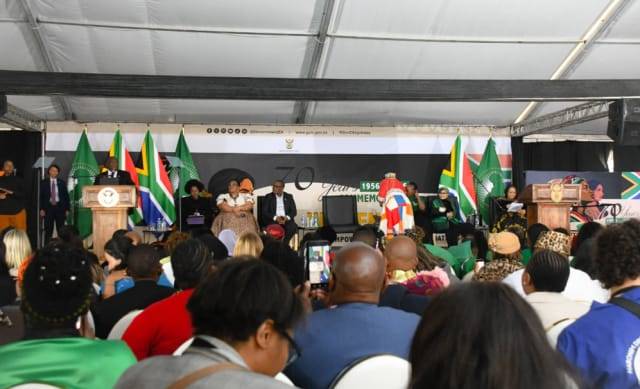
Seventy years ago, thousands of South African women stood together at the Union Buildings in Pretoria in one of the most powerful acts of resistance in the country’s history.
On 9 August 1956, more than 20,000 women marched to the Union Buildings to protest against the apartheid government’s extension of pass laws to African women.
Led by Lilian Ngoyi, Helen Joseph, Rahima Moosa and Sophia Williams-De Bruyn, the women delivered petitions demanding an end to the discriminatory legislation.
Their historic action became a defining moment in South Africa’s struggle against apartheid and remains central to the country’s annual celebration of National Women’s Day.
“Wathint’ Abafazi, Wathint’ Imbokodo”
The march became synonymous with the powerful phrase:
“Wathint’ abafazi, wathint’ imbokodo.”
Translated as “You strike a woman, you strike a rock,” the expression came to represent the strength, courage and determination of South African women.
The women gathered peacefully at the Union Buildings before leaving petitions containing their demands. Their demonstration showed that women were not simply participants in the broader liberation struggle — they were leaders who helped shape its direction.
Honouring the Women of 1956
The 70th anniversary provides an opportunity to remember the women who took part in the historic march and to preserve their stories for future generations.
Efforts to document the identities and experiences of those involved are particularly important because many of the individual women who participated have remained less visible in the historical record than the movement's better-known leaders.
Preserving these stories ensures that the legacy of the march extends beyond its four famous leaders and recognises the thousands of women who stood together that day.
Progress — But Challenges Remain
South Africa has undergone profound political and constitutional change since 1956, with the country's democratic Constitution providing extensive protections for equality and women's rights.
However, significant challenges remain.
Gender-based violence and femicide continue to affect communities across the country, while concerns around economic inequality, unemployment, access to opportunities and women's representation in leadership remain part of the national conversation. Economic empowerment also remains important, particularly for women seeking greater access to entrepreneurship, employment and financial independence.
A Legacy That Continues:
The women who marched in 1956 could not have known exactly how their actions would be remembered seven decades later.
Their protest nevertheless became a lasting symbol of collective action and resistance. As South Africa marks 70 years since the Women's March, the anniversary is both a celebration of the courage of those who came before and a reminder that the pursuit of equality remains an ongoing responsibility.
The message of 1956 continues to resonate: when women stand together, their voices can help change the course of a nation.





Comments
0 commentsBe the first to comment on this article.